

Every coin in the New Testament and what your translation calls it
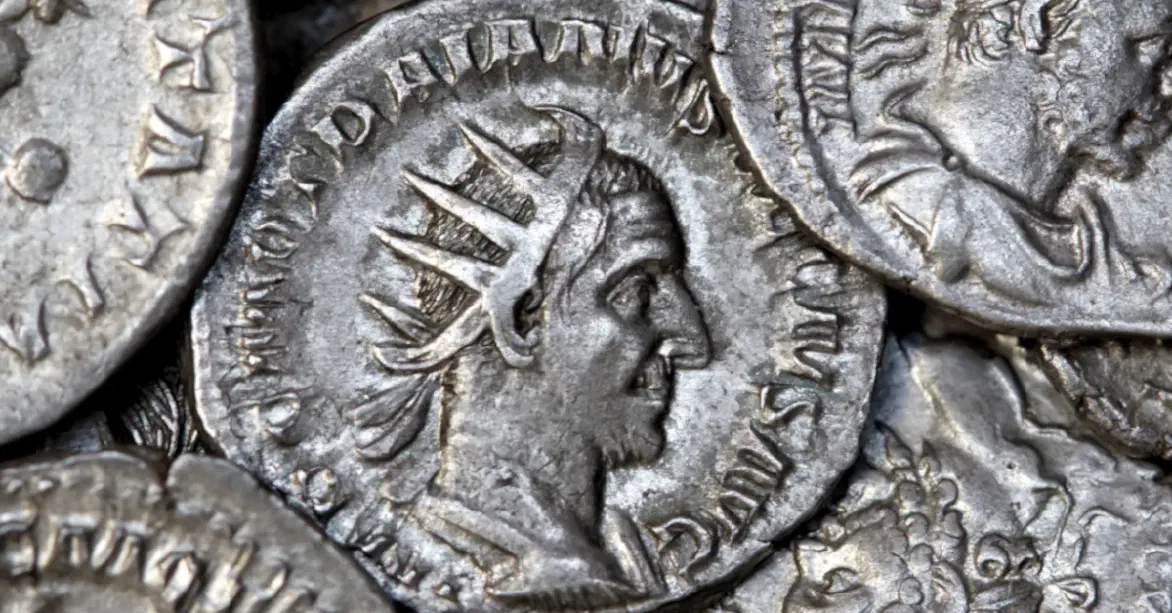
The KJV pays in mites, farthings, and pennies. Modern English Bibles pay in denarii and small copper coins. Luther pays in Scherflein, Groschen, and Silberlinge. Underneath them all sits one set of Greek and Hebrew coins with fixed exchange rates, several of them stated inside the verses themselves. The value that converts across every translation is days of labor, the only exchange rate that survives twenty centuries.

The crosswalk table
| Greek/Hebrew | KJV | Modern English (ESV/NIV) | Luther / Elberfelder | Value | Where |
|---|---|---|---|---|---|
| λεπτόν lepton | mite | small copper coin | Scherflein | ½ quadrans; smallest coin | Mark 12:42 , Luke 21:2 |
| κοδράντης kodrantes (Lat. quadrans) | farthing | penny | Heller / Pfennig | ¼ assarion | Matthew 5:26 , Mark 12:42 |
| ἀσσάριον assarion | farthing | penny | Groschen* / Pfennig | 1/16 denarius | Matthew 10:29 , Luke 12:6 |
| δηνάριον denarion | penny | denarius | Groschen* / Denar | 1 day’s wage | Matthew 20:2 , 22:19 ; Mark 6:37 |
| δραχμή drachme | piece of silver | silver coin | Groschen* / Drachme | ≈ 1 denarius | Luke 15:8 |
| δίδραχμον didrachmon | tribute | two-drachma tax | Tempelgroschen / Doppeldrachme | 2 denarii; the temple tax | Matthew 17:24 |
| στατήρ stater | piece of money | shekel / four-drachma coin | Silbergroschen / Stater | 4 denarii; pays temple tax for two | Matthew 17:27 |
| ἀργύριον argyrion (pl.) | pieces of silver | silver coins | Silberlinge | shekel-class silver | Matthew 26:15 |
| μνᾶ mna | pound | mina | Pfund | ≈ 100 denarii | Luke 19:13 |
| τάλαντον talanton | talent | talent | Zentner* / Talent | ≈ 6,000 denarii; a weight, not a coin | Matthew 18:24 , 25:15 |
| שֶׁקֶל shekel (OT) | shekel | shekel | Silberling / Sekel | ≈ 11 g silver; a weight before a coin | Genesis 23:16 , Exodus 30:13 |
* Luther’s renderings vary between the 1545, 1912, and 2017 revisions (Groschen covers several different coins in the older editions; the 2017 uses Silbergroschen and Zentner in places). The German column follows common Luther usage and should be checked against the specific edition quoted. The Elberfelder column follows the 1905 edition, the text of elberfeldermatters.com; it uses Pfennig for both kodrantes and assarion.
Two KJV traps in the table:
- “Farthing” is two different coins. Matthew 5:26 and Mark 12:42 use kodrantes (quadrans); Matthew 10:29 and Luke 12:6 use assarion, four times bigger. Same English word.
- “Penny” is a day’s wage. Every KJV penny is a denarius. The laborers of Matthew 20:2 agree to work sunrise to sunset for a penny because the penny is a full day’s silver.
Exchange rates stated inside the text
The Bible carries its own conversion notes:
- Mark 12:42: “two mites, which make a farthing”: 2 lepta = 1 quadrans.
- Matthew 20:2: “he had agreed with the labourers for a penny a day”: 1 denarius = 1 day.
- Matthew 17:24-27: the temple tax is the didrachmon (2 drachmas ≈ 2 denarii, the half-shekel of Exodus 30:13; its administration fills the Mishnah tractate Shekalim); the coin in the fish’s mouth is a stater (4 drachmas): “that take, and give unto them for me and thee.” The stater pays exactly two men’s tax.
In today’s money
The day wage is the exchange rate that survives; give it a modern number and every coin converts. At a US laborer’s wage of about $150 a day (roughly $18 an hour, a worker’s pay, not a professional salary):
| Coin | Fraction of a day wage | In today’s money |
|---|---|---|
| lepton, the widow’s mite | 1/128 | ≈ $1.20 |
| kodrantes, the farthing | 1/64 | ≈ $2.40 |
| assarion, the other farthing | 1/16 | ≈ $9.40 |
| denarion, the penny | 1 | $150 |
| didrachmon, the temple tax | 2 | $300 |
| stater, the coin in the fish | 4 | $600 |
| mna, the pound | 100 | $15,000 |
| talanton, the talent | 6,000 | $900,000 |
Adjust the anchor to your own economy; the fractions stay fixed.
The famous sums, converted
The widow’s two mites (Mark 12:41-44 ). The smallest denomination that existed, twice: about 1/64 of a day’s wage, roughly $2.40. The story requires the coin to be nearly worthless; that is the mechanism of “she of her want did cast in all that she had.” Luther minted a German word for the verse: Scherflein, which survives in the idiom “sein Scherflein beitragen” to this day.
Two hundred pennyworth of bread (Mark 6:37). The disciples’ estimate for feeding the five thousand: 200 denarii, some eight months of wages ($30,000). The number is their way of saying “impossible.”
Three hundred pence of ointment (John 12:5 ). Judas prices Mary’s spikenard at 300 denarii, a year’s wages in a jar ($45,000), poured out in one act. His indignation is in the number.
The thirty pieces of silver (Matthew 26:15). Thirty argyria, silver shekels, in the first century most plausibly Tyrian tetradrachms (the temple’s own approved coinage), each about four denarii: roughly 120 days’ wages ($18,000). Exodus 21:32 : “If the ox shall push a manservant or a maidservant; he shall give unto their master thirty shekels of silver”, the fixed compensation for a dead slave. Zechariah 11:12-13 stages the insult in advance: “So they weighed for my price thirty pieces of silver. And the LORD said unto me, Cast it unto the potter: a goodly price that I was prised at of them.” The chief priests valued the shepherd at the tariff of a gored slave, and the money ended at the potter’s field (Matthew 27:7-10 ), completing Zechariah’s script.
Ten thousand talents against a hundred pence (Matthew 18:23-35 ). The unforgiving servant owes 10,000 talents ≈ 60 million denarii ($9 billion), roughly 200,000 years of labor, a number chosen to be unpayable (Josephus records the annual tribute of entire provinces in mere hundreds of talents). His fellow servant owes him 100 denarii ($15,000), a real debt, four months’ wages by the same count, and utterly beside the point. The parable’s mercy ratio is about 600,000 to one.
Weights before coins
Old Testament “money” is weighed, not minted: coinage reaches Judea only in the Persian period. Abraham “weighed to Ephron the silver… four hundred shekels of silver, current money with the merchant” (Genesis 23:16): the shekel (שֶׁקֶל , from shaqal, “to weigh”) is a weight of about 11 grams, long before it is a coin. The sanctuary shekel (Exodus 30:13), the half-shekel temple tax it defines, the talent (about 3,000 shekels), and the mina sit in the same weight system. This is why dishonest scales are a covenant offense: “a false balance is abomination to the LORD” (Proverbs 11:1 ).
References
- Mishnah, Shekalim: administration of the half-shekel temple tax.
- Josephus, Antiquities 17.11.4: provincial annual tributes measured in hundreds of talents, the scale against which Matthew 18’s ten thousand talents is hyperbole.