

The Deuteronomy 32 worldview and why it matters for the entire Old Testament
Deuteronomy 32:8-9 describes God dividing the nations according to the number of the sons of God and reserving Israel as his own inheritance. The Dead Sea Scrolls preserve the original reading: bene elohim (בְּנֵי אֱלֹהִים , “sons of God”), not “sons of Israel” as the later Masoretic Text reads. The Septuagint confirms this with ἀγγέλων θεοῦ (angelon theou, “angels of God”). This passage establishes a cosmic geography that runs through the entire Old Testament: the nations are governed by divine beings, and Israel alone belongs directly to YHWH.

The text
Deuteronomy 32:8-9 (KJV, with the Dead Sea Scrolls correction noted):
“When the most High divided to the nations their inheritance, when he separated the sons of Adam, he set the bounds of the people according to the number of the children of Israel [DSS: sons of God]. For the LORD’S portion is his people; Jacob is the lot of his inheritance.”
The KJV follows the Masoretic Text, which reads bene Yisrael (בְּנֵי יִשְׂרָאֵל , “sons of Israel”). The Dead Sea Scrolls fragment 4QDeutj reads bene elohim (בְּנֵי אֱלֹהִים ). The Septuagint, translated from Hebrew manuscripts older than the Masoretic Text, reads ἀγγέλων θεοῦ . Two independent witness lines (DSS, LXX) against one (MT) resolve the textual question. The original reading is “sons of God.”
The implication: the number of nations was set to match the number of divine beings in God’s council. Each nation received a divine governor. Israel received YHWH himself.
The event behind the text
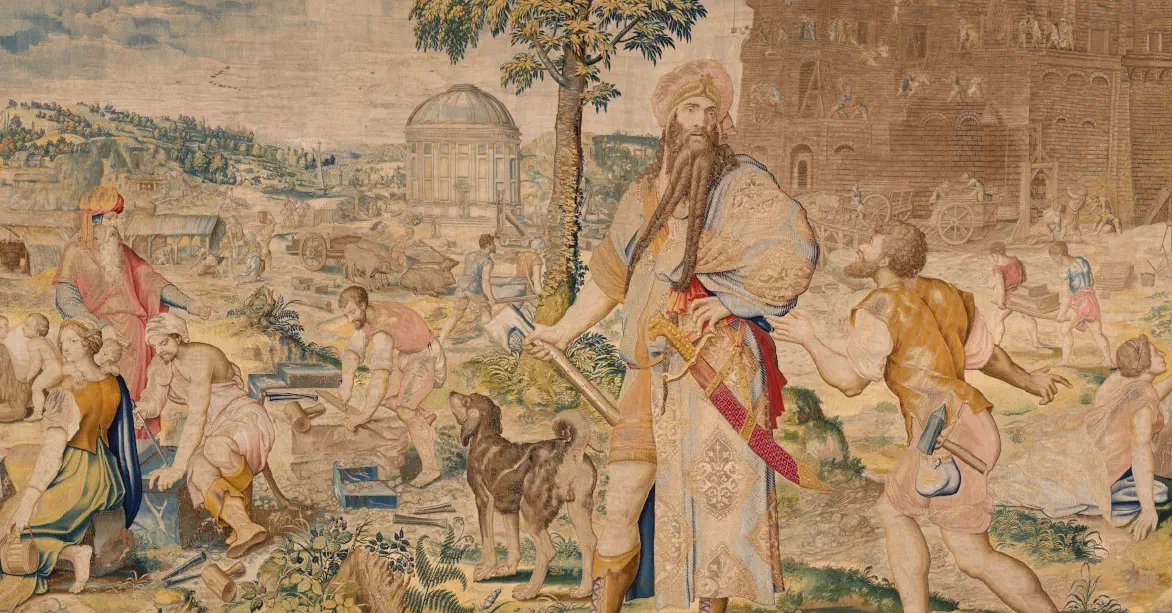
The division described in Deuteronomy 32:8-9 corresponds to the Tower of Babel narrative in Genesis 11. God scatters the nations and confuses their languages. Deuteronomy 32 supplies the mechanism: the scattered nations were placed under the authority of the bene elohim, the divine council members.
Genesis 10 lists 70 nations descended from Noah’s sons. The number 70 recurs structurally: Jacob’s family enters Egypt as 70 persons (Genesis 46:27 ). Jesus sends 70 disciples in Luke 10:1 . The number maps the nations to the members of the divine council.
The next event in the Genesis narrative is the call of Abraham in Genesis 12. After the nations are divided among the sons of God, God begins a new project: a people who belong to him directly, not through an intermediary. The sequence is deliberate. Babel scatters the nations. Deuteronomy 32 explains how they were governed afterward. Abraham begins the remedy.
Psalm 82: the judicial sequel
The divine beings assigned in Deuteronomy 32 ruled unjustly. Psalm 82 records the verdict. God stands in the divine assembly and charges the council members with perverting justice, then sentences them to mortality. Psalm 82:8 closes with the demand that God inherit all nations, reversing what Deuteronomy 32 had distributed. The two passages form a single arc: allotment, failure, reclamation.
Deuteronomy 4:19-20: the allotment stated plainly
Deuteronomy 4:19-20 : “And lest thou lift up thine eyes unto heaven, and when thou seest the sun, and the moon, and the stars, even all the host of heaven, shouldest be driven to worship them, which the LORD thy God hath divided unto all nations under the whole heaven. But the LORD hath taken you, and brought you forth out of the iron furnace, even out of Egypt, to be unto him a people of inheritance.”
The host of heaven (צְבָא הַשָּׁמַיִם , tseva hashamayim) is allotted to the nations. Israel is taken out of that system entirely. The text says God divided the host of heaven to the nations. Israel’s prohibition against worshipping them is precisely because those entities are real and have real authority over the other nations. YHWH took Israel out of that jurisdiction.
Daniel 10: the divine governors in action
Daniel 10:13 : “But the prince of the kingdom of Persia withstood me one and twenty days: but, lo, Michael, one of the chief princes, came to help me.”
Daniel 10:20 : “Then said he, Knowest thou wherefore I come unto thee? and now will I return to fight with the prince of Persia: and when I am gone forth, lo, the prince of Grecia shall come.”
The sar (שַׂר , “prince, ruler”) of Persia is a spiritual entity capable of opposing an angel for 21 days. Michael is identified as the sar assigned to Israel (Daniel 12:1 ). The prince of Greece is another entity of the same class. These are the Deuteronomy 32 governors in operational context: spiritual beings with real territorial authority who interact with earthly geopolitics.
The New Testament continuation
The framework does not end with the Old Testament. Paul identifies the same structure.
Ephesians 6:12 : “For we wrestle not against flesh and blood, but against principalities, against powers, against the rulers of the darkness of this world, against spiritual wickedness in high places.”
The Greek terms are precise. Archai (ἀρχαί , “principalities, rulers”) and exousiai (ἐξουσίαι , “authorities, powers”) are the spiritual governance layer behind earthly political structures. Kosmokratores (κοσμοκράτορες , “world rulers”) specifies their domain: this present darkness, the current world system.
1 Corinthians 10:20 : “But I say, that the things which the Gentiles sacrifice, they sacrifice to devils, and not to God.”
The word is daimonia (δαιμόνια ), not a synonym for fictional entities. Paul quotes Deuteronomy 32:17 directly. The gods behind pagan sacrifice are real. They are the allotted rulers of the nations from the original division. Israel was extracted from their jurisdiction. The Gentile world was not, until the gospel extended that extraction to all nations.
The implications
The Deuteronomy 32 framework resolves several difficulties in the Old Testament text:
The gods of the nations are real and are treated as real throughout the text. Exodus 12:12 : “Against all the gods of Egypt I will execute judgment.” This is a contest of authority between YHWH and the divine governors of Egypt.
Israel’s prohibition against idolatry makes sense only if the alternative is real. “Thou shalt have no other gods before me” (Exodus 20:3 ) is a jurisdictional command. Other elohim exist. Israel belongs to YHWH alone.
The geographic specificity of spiritual conflict in Daniel and the prophets (the prince of Persia, the prince of Greece, the gods of specific nations) reflects territorial assignments, not cultural metaphors.
The Great Commission in Matthew 28:19 (“Go ye therefore, and teach all nations”) is an invasion of territory governed by the bene elohim. The gospel does not just save individuals. It reclaims nations from the jurisdiction of the allotted gods.
References
- Dead Sea Scrolls, 4QDeutj: reads bene elohim (sons of God) in Deuteronomy 32:8 , against the Masoretic bene Israel.
- Septuagint (LXX), Deuteronomy 32:8: reads angelon theou (angels of God), agreeing with 4QDeutj.