

John 8 and 9 are one confrontation
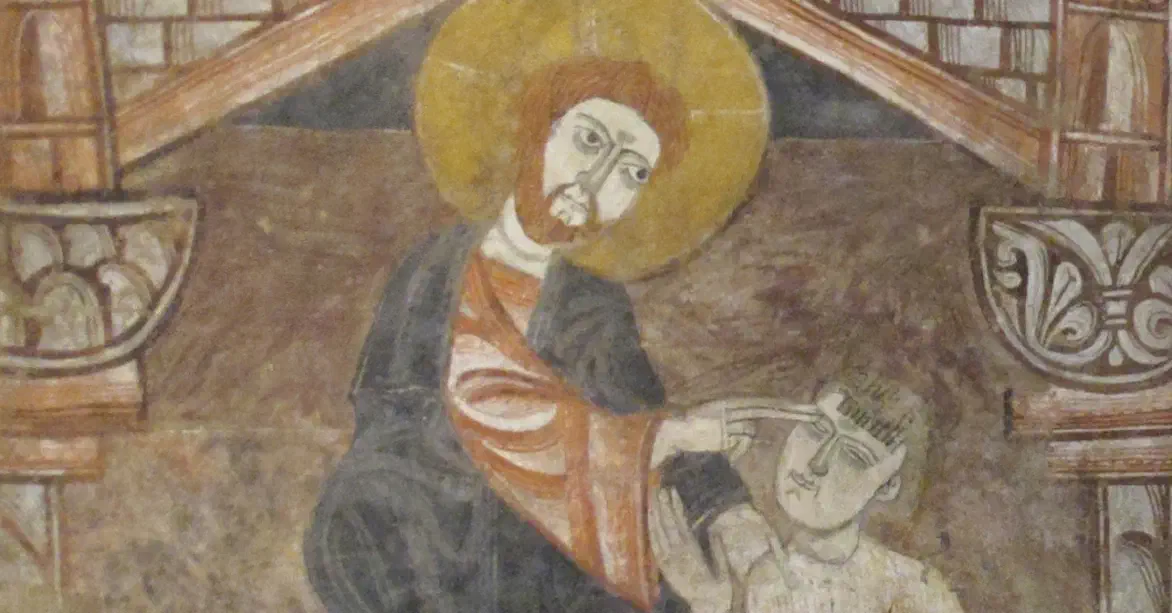
The Pharisees challenge Jesus’ legitimacy in John 8:41 : “We be not born of fornication.” In the next chapter, Jesus heals a man born blind using saliva and dirt. The Talmud records that the saliva of a father’s firstborn heals eyes (Bava Batra 126b). The healing method is the answer to the accusation. What he did had never been done before in human history.

The accusation
John 8 is a confrontation about identity. Jesus says, “I speak that which I have seen with my Father” (8:38). The Pharisees respond: “We be not born of fornication; we have one Father, even God” (8:41).
The emphasis is on “we.” The statement is personal. They are not making a theological point about their relationship to God. They are contrasting their legitimate birth with his. The accusation is that Jesus is illegitimate.
This charge exists in the rabbinic record. Sanhedrin 67a preserves the tradition of ben Pandera (בן פנדרא ): “His mother was Miriam, the women’s hairdresser… she who was the descendant of princes and governors played the harlot with carpenters.” Whether the passage refers directly to the Jesus of the gospels is debated. The tradition itself is documented: a figure named Yeshua, accused of illegitimate birth, appears in the Talmud, and John 8:41 is consistent with that accusation circulating during his lifetime.
Jesus does not defend himself with words. He walks away (John 8:59 ). His response comes in the next chapter.
The saliva of the firstborn
The Babylonian Talmud records a legal tradition about firstborn sons:
| Source | Reference | Content |
|---|---|---|
| Babylonian Talmud | Bava Batra 126b | The saliva of a father’s firstborn heals. Used as legal evidence to establish firstborn status for inheritance |
| Rashbam on Bava Batra | 126b | Specifies the healing applies to eye ailments |
| Babylonian Talmud | Shabbat 108b | Fasting saliva applied to eyes is recognized as effective medicine, prohibited on Shabbat because it works |
The Talmud was compiled centuries after Jesus (Mishnah c. 200 AD, Babylonian Talmud c. 500 AD), but these traditions existed as oral law long before they were written down. The oral Torah developed alongside the written Torah, likely after the return from Babylon under Ezra and Nehemiah as fence laws to prevent another exile. By the first century the Pharisees operated from this oral tradition as established legal authority. What the Talmud later recorded, the Pharisees in John 8-9 already knew.
It appears in a property-law discussion. A man comes before Rabbi Hanina claiming someone is a firstborn. The evidence offered: his father would tell people to go to his son because he is a firstborn and his saliva heals. The Gemara clarifies: the saliva of a father’s firstborn heals, but the saliva of a mother’s firstborn does not.
The distinction matters. A mother’s firstborn means the first child she bore. A father’s firstborn means the firstborn son in relation to the father. The Pharisees know this tradition.
The response
John 9:6 : “When he had thus spoken, he spat on the ground, and made clay of the spittle, and he anointed the eyes of the blind man with the clay.”
Jesus normally heals with a word. Sometimes with a touch. In this instance, one chapter after his legitimacy is challenged, he uses saliva on the eyes of a man born blind.
The method is the message. If the Pharisees know Bava Batra 126b (and they do, it is their own legal tradition), then what Jesus just did in public is a claim. He is the firstborn of the Father. Not Joseph’s son. Not ben Pandera. The Father’s firstborn, demonstrated by the very method their own tradition recognizes as proof.
He also does it on the Sabbath. Making clay (kneading) is one of the 39 categories of prohibited Sabbath work. Applying saliva to eyes on the Sabbath is explicitly prohibited (Shabbat 108b). Jesus is not being careless. He is forcing the confrontation into the open.
And what he did had never been done before. The healed man himself says it: “Since the world began was it not heard that any man opened the eyes of one that was born blind” (John 9:32 ).
The reaction
The Pharisees do not ask how he healed. They know how. They interrogate the man, then his parents (John 9:18-23 ).
The parents confirm their son was born blind. They confirm he can now see. They refuse to say anything else “because they feared the Jews: for the Jews had agreed already, that if any man did confess that he was Christ, he should be put out of the synagogue” (John 9:22 ).
“Put out of the synagogue” is the Greek aposynagogos (ἀποσυνάγωγος , “expelled from the synagogue”), a word that appears only in John (9:22, 12:42, 16:2). The rabbinic excommunication system (Moed Katan 16a-17a) operated at multiple levels:
| Level | Hebrew | Effect |
|---|---|---|
| Ostracism | Niddui | 30 days. No one sits within 4 cubits. Mourning practices required |
| Full excommunication | Cherem | Indefinite. No business, no teaching, no community contact |
Cherem meant economic and social death. The family would be cut off from every aspect of Jewish communal life.
The severity of the reaction matches the severity of the claim. A man who just publicly claimed to be the Father’s firstborn, using a method the Pharisees’ own legal tradition recognizes, performing a miracle never before seen in human history, draws excommunication proceedings against his family.
The Pharisees understood exactly what happened.
References
- Babylonian Talmud, Bava Batra 126b : firstborn saliva heals; used as legal evidence to establish firstborn status for inheritance.
- Rashbam on Bava Batra 126b: specifies the healing applies to eye ailments.
- Babylonian Talmud, Shabbat 108b : fasting saliva applied to eyes recognized as effective medicine, prohibited on Shabbat.
- Babylonian Talmud, Sanhedrin 67a: ben Pandera tradition, accusation of illegitimate birth.
- Babylonian Talmud, Moed Katan 16a-17a: levels of rabbinic excommunication (niddui and cherem).