

Lucifer is a Latin word the KJV turned into a name
The word “Lucifer” appears once in the King James Bible, in Isaiah 14:12. The Hebrew under it is helel ben shachar (הֵילֵל בֶּן־שָׁחַר , “shining one, son of the dawn”), a description of the morning star, not a name. “Lucifer” is Latin, the Vulgate’s ordinary word for the morning star, and the same Latin Bible uses the same word for Christ in 2 Peter 1:19. The proper name belongs to the history of translation, not to the text.

The Hebrew
How art thou fallen from heaven, O Lucifer, son of the morning! how art thou cut down to the ground, which didst weaken the nations! Isaiah 14:12 KJV
Helel (הֵילֵל ) derives from the root halal (הלל , “to shine, to praise”), the root of hallelujah and of the name Mahalalel in the Genesis 5 genealogy. Ben shachar (בֶּן־שָׁחַר ) is “son of the dawn.” Together: the shining one of the morning sky, the planet Venus, brighter than any star in the pre-dawn heavens.
The word occurs exactly once in the Hebrew Bible. The Old Testament itself never connects it to the satan (הַשָּׂטָן , “the adversary”) of Job and Zechariah.
The context is a taunt against a king
Isaiah 14:4 announces the genre up front: “thou shalt take up this proverb (מָשָׁל , mashal, “taunt-song”) against the king of Babylon.”
The taunt tracks the morning star’s own behavior. Venus rises brilliant before dawn, climbs, and is erased by the sunrise: the one star that visibly attempts the ascent every morning and never completes it. The king of Babylon said in his heart, “I will ascend into heaven, I will exalt my throne above the stars of God… I will be like the most High” (Isaiah 14:13-14 ). He is answered: “yet thou shalt be brought down to hell, to the sides of the pit” (14:15 ), down to Sheol, where the dead kings rise from their thrones to mock the newcomer (14:9-10 ).
Whether the taunt borrows the pattern of an older fall (a divine being who overreached and was cast down) is the layer scholars and the nachash article treat as debated. Jesus’ words in Luke 10:18 , “I beheld Satan as lightning fall from heaven,” echo the imagery. The direct address of Isaiah 14, by the chapter’s own framing, is the king of Babylon.
The translation chain
| Stage | Text | Rendering |
|---|---|---|
| Hebrew | Isaiah 14:12 | הֵילֵל בֶּן־שָׁחַר helel ben shachar, “shining one, son of dawn” |
| Septuagint (Greek, c. 250 BC) | Isaiah 14:12 | ὁ ἑωσφόρος ho heosphoros, “the dawn-bringer” |
| Vulgate (Latin, c. 405 AD) | Isaiah 14:12 | lucifer, the common Latin noun for the morning star |
| Wycliffe (English, 1380s) | Isaiah 14:12 | “Lucifer”, the Latin word carried over untranslated |
| Geneva Bible (1560) | Isaiah 14:12 | “O Lucifer, sonne of the morning” |
| KJV (1611) | Isaiah 14:12 | “O Lucifer, son of the morning”, capital L |
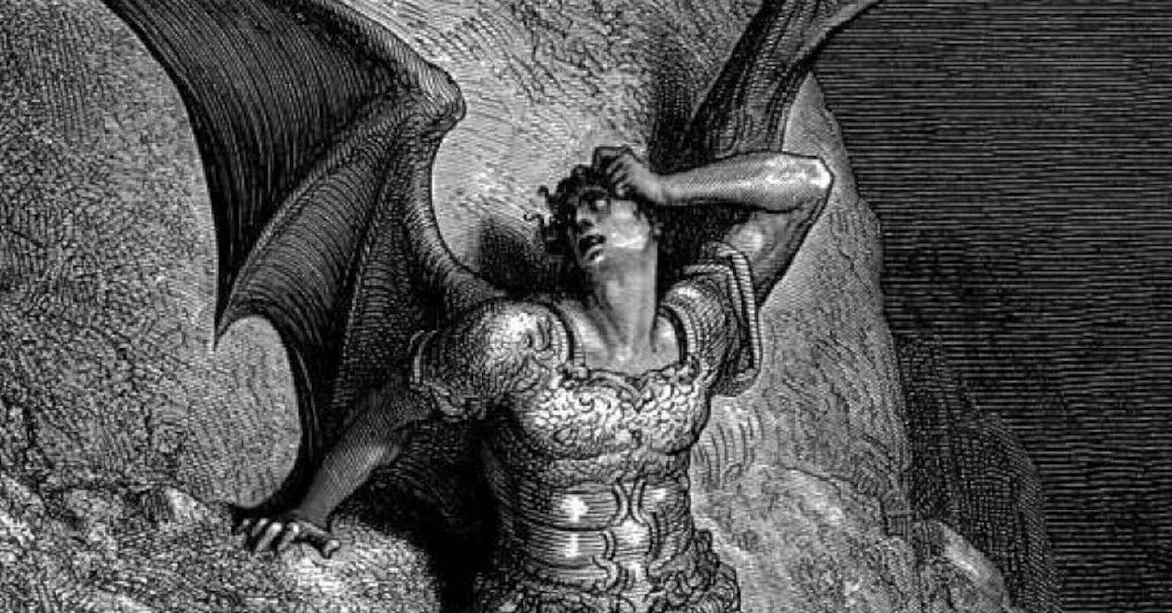
Lucifer, from lux (“light”) and ferre (“to carry”), “light-bearer”, was simply the Latin for the morning star, as ordinary as “Venus” is now. The word became a name in English by the same route “church” replaced ekklesia: the translators carried a word instead of translating it, readers capitalized the residue, and literature finished the job. Milton’s Paradise Lost gave English its picture of Lucifer as the devil’s glorious pre-fall name, and the picture flowed back into the reading of Isaiah.
The Latin Bible calls Christ lucifer
The New Testament uses the morning star as a title twice, and both times it belongs to Jesus.
I Jesus have sent mine angel to testify unto you these things in the churches. I am the root and the offspring of David, and the bright and morning star. Revelation 22:16 KJV
2 Peter 1:19 : “until the day dawn, and the day star arise in your hearts.” The Greek is phosphoros (φωσφόρος , “light-bearer”), the exact Greek equivalent of the Latin lucifer. And the Vulgate of this verse reads accordingly: et lucifer oriatur in cordibus vestris, “and lucifer arise in your hearts.”
The same Latin Bible that gave English the word in Isaiah 14 applies it to Christ in 2 Peter 1. In Latin the two verses agree: the word means morning star, and a usurper king can be taunted as a fallen one while the risen Christ is the true one. The contradiction only appears when the common noun of one verse is promoted to a proper name and the other verse is translated normally.
References
- Septuagint (LXX), Isaiah 14:12: heosphoros, the dawn-bringer.
- Jerome, Vulgate: lucifer at Isaiah 14:12 and at 2 Peter 1:19 (of Christ).
- Geneva Bible (1560) and KJV (1611), Isaiah 14:12: the capitalized English renderings.
- John Milton, Paradise Lost: the literary consolidation of Lucifer as the devil’s pre-fall name.