

Moses and Paul follow the same pattern at every turning point
Moses and Paul follow the same pattern across every major turning point. Both are educated in the wrong system, both are set in motion by a death, both encounter God visually, and both arrive to find that God has already prepared the field before them. The pattern converges on Shavuot: the golden calf brings 3,000 deaths under the Law, Pentecost brings 3,000 saved under the Spirit. Same feast, opposite outcomes.

Educated in the wrong system
Moses grew up in the Egyptian court. Stephen’s speech in Acts 7:22 summarizes the result: “Moses was learned in all the wisdom of the Egyptians, and was mighty in words and in deeds.”
Paul grew up in the Pharisaic system. His own summary in Philippians 3:5 : “as touching the law, a Pharisee.” He expanded the point in Acts 22:3 : “brought up in this city at the feet of Gamaliel, and taught according to the perfect manner of the law of the fathers.” He learned it thoroughly, but within a framework that could not recognize the Messiah it described.
Both men were insiders in systems that opposed what God was doing. Moses had the education of the oppressors. Paul had the theology of the persecutors. The first thing God did with both was remove them from the system entirely.
A death as catalyst
Moses saw an Egyptian beating a Hebrew and killed him (Exodus 2:12 ). When the act became known, he fled Egypt and ended up in Midian. Without it, Moses stays in Pharaoh’s court.
Paul held the coats while Stephen was stoned (Acts 7:58 ). Stephen’s death escalated his persecution. Acts 8:1 says Saul was “consenting unto his death,” and Acts 8:3 has him entering houses and committing men and women to prison. The death set him in motion, moving toward Damascus with letters of authority to arrest more believers.
Moses committed the killing and fled. Paul approved the killing and advanced.
God encounters them visually
Moses saw the burning bush (Exodus 3:2 ). The angel of the LORD appeared in a flame of fire out of the midst of a bush that burned without being consumed. Moses turned aside to look, and God spoke to him from within it.
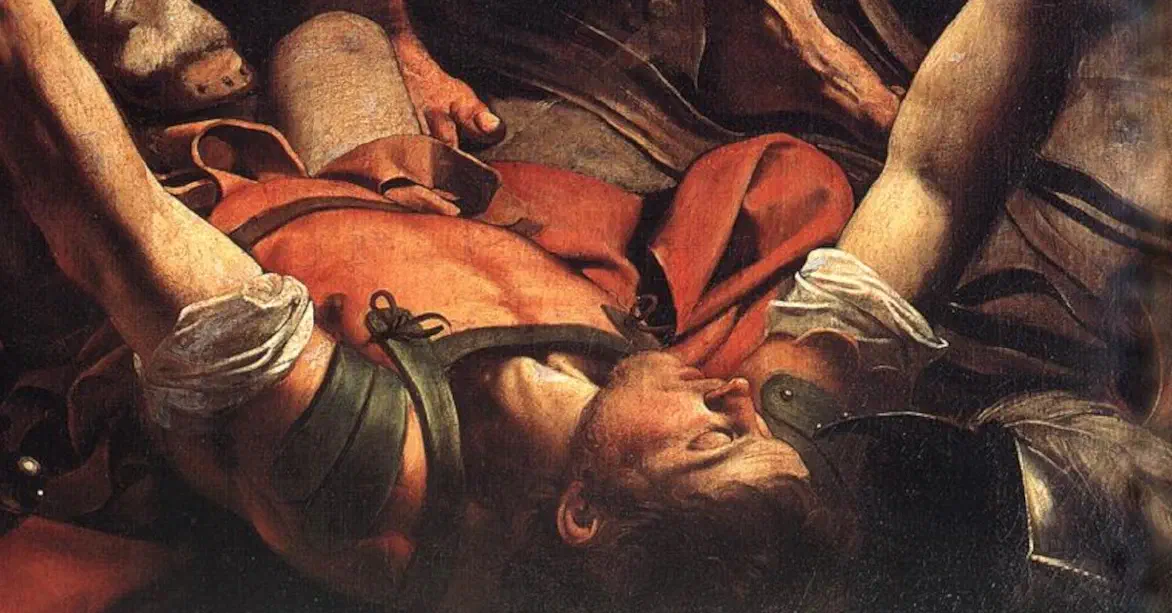
Paul saw a light from heaven (Acts 9:3 ). The light was bright enough to blind him. He fell to the ground, and Christ spoke to him from within it.
Both men were headed somewhere else. Moses was tending Jethro’s flock. Paul was on his way to arrest believers. Both saw light, heard a voice from within it, and received a commission on the spot.
God already prepared the field
Neither man walks into a vacuum.
Moses fled to Midian and found Jethro, a priest (Exodus 2:16 ). Midian was a son of Abraham through Keturah (Genesis 25:2 ), which explains the connection to the God of Israel. After the Exodus, Jethro blessed YHWH by name, said “Now I know that the LORD is greater than all gods” (Exodus 18:11 ), and offered burnt offerings and sacrifices (Exodus 18:12). Moses did not arrive among strangers.
Paul traveled to Damascus, Antioch, Corinth, Ephesus, Rome. In every city, believers were already present. At Pentecost, Jews from “every nation under heaven” (Acts 2:5) had heard the gospel and carried it home (Acts 8:1-4, 11:19-21). By the time Paul arrived anywhere, the seed was already planted.
God prepares the field, then sends the worker.
The mission: free God’s people
Moses was sent back to Egypt to deliver Israel from physical bondage. “Let my people go” is the repeated demand (Exodus 5:1 ). The deliverance was physical and national: the plagues, then the march through the sea.
Paul was sent to deliver people from spiritual bondage. His message in every city was freedom from the law of sin and death through Christ (Romans 8:2 ). The deliverance was individual and internal: a new covenant written on hearts rather than stone.
Paul used exodus language deliberately. Physical bondage in Egypt, spiritual bondage under law and sin. Blood on the doorposts, the blood of Christ. Crossing through water, crossing through baptism (1 Corinthians 10:1-2 ).
The 3,000 at Shavuot
At Sinai, while Moses was on the mountain receiving the tablets written by the finger of God, Israel made the golden calf (Exodus 32:1-6). Moses came down, saw the calf, and the Levites executed judgment: “and there fell of the people that day about three thousand men” (Exodus 32:28 ).
Jewish tradition places the giving of the Law at Sinai on Shavuot (Talmud, Shabbat 86b), the feast of weeks, fifty days after the Exodus from Egypt. The same feast that Leviticus 23:15-16 defines by counting:
ye shall count unto you from the morrow after the sabbath, from the day that ye brought the sheaf of the wave offering; seven sabbaths shall be complete: even unto the morrow after the seventh sabbath shall ye number fifty days. Leviticus 23:15-16 KJV
In Acts 2:1 , “when the day of Pentecost was fully come,” the Spirit fell. Peter preached. “Then they that gladly received his word were baptized: and the same day there were added unto them about three thousand souls” (Acts 2:41 ).
Pentecost is the Greek name for Shavuot. Same feast. Same number. At Sinai, the Law on stone killed 3,000. At Jerusalem, the Spirit poured out on Shavuot saved 3,000. Paul identified the principle in 2 Corinthians 3:6 : “the letter killeth, but the spirit giveth life.”
The man who wrote that sentence had been a Pharisee trained in the very law that killed the 3,000 at Sinai. He understood both sides of the equation from the inside.
The omer count as the calendar bridge
Reading Luke and Acts as a continuous narrative (Luke wrote both, and Acts 1:1 opens by referencing “the former treatise”), the timeline from the crucifixion to Pentecost maps directly onto the omer count. Jesus was crucified at Passover. The firstfruits offering was made on the morrow after the sabbath during Passover week, and the counting of the omer begins. The omer count runs fifty days from that offering to Shavuot.
The ascension occurs forty days after the resurrection (Acts 1:3). Ten more days pass before Pentecost (Acts 2:1). Forty plus ten equals fifty. The omer count, prescribed in Leviticus 23:15-16, is the calendar framework that holds the transition from Luke to Acts together.
The same calendar holds the Moses parallel. Israel left Egypt at Passover. Fifty days later they stood at Sinai and received the Law. The church was born on the same feast, the same number of days after Passover.
The pattern
| Moses | Paul | |
|---|---|---|
| Education | Egyptian court (Acts 7:22) | Pharisaic school (Acts 22:3) |
| Catalytic death | Kills the Egyptian (Exodus 2:12) | Approves Stephen’s stoning (Acts 7:58) |
| Removal | Flees to Midian | Blinded on Damascus road |
| Visual encounter | Burning bush (Exodus 3:2) | Light from heaven (Acts 9:3) |
| Field already prepared | Jethro knows YHWH | Believers in every city |
| Mission | Physical exodus from Egypt | Spiritual exodus from sin and law |
| 3,000 at Shavuot | 3,000 die (Exodus 32:28) | 3,000 saved (Acts 2:41) |
| The principle | The letter kills | The Spirit gives life |