

Everyone raised from the dead in the Bible
Eight named individuals are raised from the dead in the Bible besides Jesus (three by the prophets, three by Jesus, two through the apostles), plus one unnumbered company at the crucifixion. The list is short enough to know completely and patterned enough to trace: the prophets petition, Jesus commands, the apostles act in his name, the double portion of Elisha shows up in the count, and one feature separates the whole list from Easter morning: they all died again.

The complete list
| # | Person | Raised through | Text | Method |
|---|---|---|---|---|
| 1 | Widow of Zarephath’s son | Elijah | 1 Kings 17:17-24 | Stretched himself on the child three times, cried to the LORD |
| 2 | The Shunammite’s son | Elisha | 2 Kings 4:18-37 | Prayed, lay upon the boy, mouth to mouth, eyes to eyes |
| 3 | Man cast into Elisha’s tomb | Elisha’s bones | 2 Kings 13:20-21 | Touched the prophet’s bones and “stood up on his feet” |
| 4 | Jairus’s daughter | Jesus | Mark 5:35-43 | Command: “Talitha cumi” |
| 5 | Widow of Nain’s son | Jesus | Luke 7:11-17 | Command: “Young man, I say unto thee, Arise” |
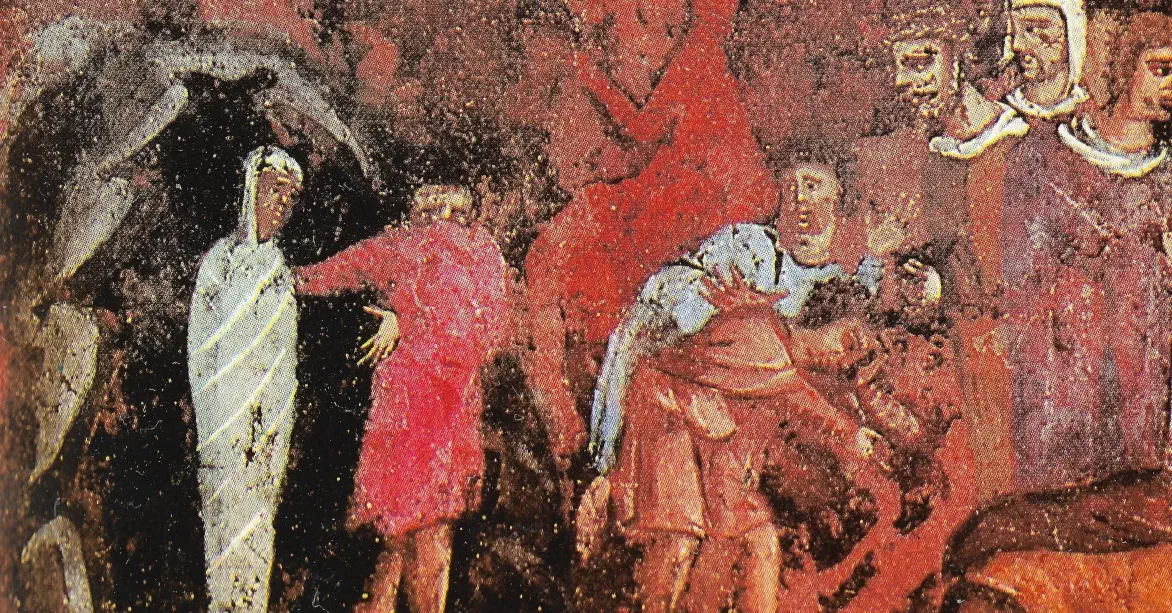
| 6 | Lazarus of Bethany | Jesus | John 11:1-44 | Command: “Lazarus, come forth” |
| - | Many saints | At the crucifixion | Matthew 27:52-53 | Graves opened; they entered Jerusalem after his resurrection |
| 7 | Tabitha (Dorcas) | Peter | Acts 9:36-42 | Prayed, then: “Tabitha, arise” |
| 8 | Eutychus | Paul | Acts 20:9-12 | Fell from the third loft; Paul embraced him, “his life is in him” |
The prophets: petition
Elijah at Zarephath (1 Kings 17). The first raising in Scripture happens outside Israel, in Sidonian territory, for a Gentile widow, the case Jesus cites at Nazareth to explain why prophets go where they are received (Luke 4:25-26 ). Elijah stretches himself upon the child three times and cries, “O LORD my God, I pray thee, let this child’s soul come into him again.” The narrator’s summary keeps the agency where Elijah put it: “the LORD heard the voice of Elijah; and the soul of the child came into him again.”
Elisha at Shunem (2 Kings 4). The son promised to the barren Shunammite dies in her lap. Her response is a faith text hiding in a narrative: to every question on the road she answers “It is well” (שָׁלוֹם , shalom), with her son lying dead on the prophet’s bed. Elisha prays and stretches himself on the child, “and the flesh of the child waxed warm”; the boy sneezes seven times and opens his eyes.
The bones of Elisha (2 Kings 13:20-21). A burial party, surprised by Moabite raiders, throws a corpse into Elisha’s tomb; “when the man was let down, and touched the bones of Elisha, he revived, and stood up on his feet.” The strangest entry on the list (a posthumous raising, no prayer, no prophet) is the ledger line that completes a pattern: Elisha had asked for a double portion of Elijah’s spirit (2 Kings 2:9 ). Elijah raised one. Elisha raised two, the second one dead himself.
Jesus: command
The three gospel raisings escalate publicly: a girl minutes dead in a private room, a man on his funeral bier at the town gate, and a friend four days in the tomb before a crowd.
Jairus’s daughter (Mark 5). Mark preserves the Aramaic: Talitha cumi (טַלְיְתָא קוּמִי ), “Damsel, I say unto thee, arise.” No petition precedes it. The mourners’ laughter at “the damsel is not dead, but sleepeth” (5:39-40 ) certifies the death: everyone present knew a dead child when they saw one.
The widow of Nain’s son (Luke 7). Jesus interrupts a funeral procession, touches the bier, and speaks to the corpse: “Young man, I say unto thee, Arise.” Luke’s crowd answers: “a great prophet is risen up among us”. Nain sits within sight of Shunem, where Elisha had raised the Shunammite’s son. The next verses are John the Baptist’s question and the Isaiah checklist answer: “the dead are raised.”
Lazarus (John 11). The deliberate fourth day, the decomposition Martha states aloud, the command addressed by name. The claim comes before the miracle: “I am the resurrection, and the life” (John 11:25 ), one of the 37 ego eimi statements. The prophets prayed to the power of resurrection. He said it stood in front of them.
Between the second and third, Matthew 27:52-53 records the mass instance at the crucifixion: “the graves were opened; and many bodies of the saints which slept arose, and came out of the graves after his resurrection.” Two verses, no names, no numbers.
The apostles: in his name
Tabitha (Acts 9). Peter puts the mourners out (the procedure he watched in Jairus’s house), kneels, prays, and turns to the body: “Tabitha, arise.” The Aramaic report of the command, Tabitha cumi, would sit one letter away from Talitha cumi.
Eutychus (Acts 20). A young man sinks into sleep during Paul’s long midnight sermon, falls from the third loft, and is “taken up dead.” Paul embraces him (the posture of Elijah and Elisha, not the bare command) and the boy is brought back alive. Luke, the physician, wrote “dead” (νεκρός ), not “as if dead”. The qualified form was available: Mark used it of the boy in Mark 9:26 , “he was as one dead; insomuch that many said, He is dead”. Luke never uses it.
They all died again
Every person on this list returned to mortal life and, in time, to the grave. Lazarus’s second death was expected within the story itself: the chief priests planned it (John 12:10 ). These are resuscitations: the old body restarted, still under the sentence of Genesis 3.
The New Testament reserves different language for Easter:
But now is Christ risen from the dead, and become the firstfruits of them that slept. 1 Corinthians 15:20 KJV
Firstfruits (ἀπαρχή , aparche) and “the firstborn from the dead” (Colossians 1:18 ) both claim priority, which the list above would contradict if it were the same kind of event. The titles hold because the categories differ: everyone else rose back, into a body that dies. Christ rose forward, “death hath no more dominion over him” (Romans 6:9 ), the first of a kind, the sheaf cut on Firstfruits morning that guarantees the harvest: “afterward they that are Christ’s at his coming” (1 Corinthians 15:23 ).