

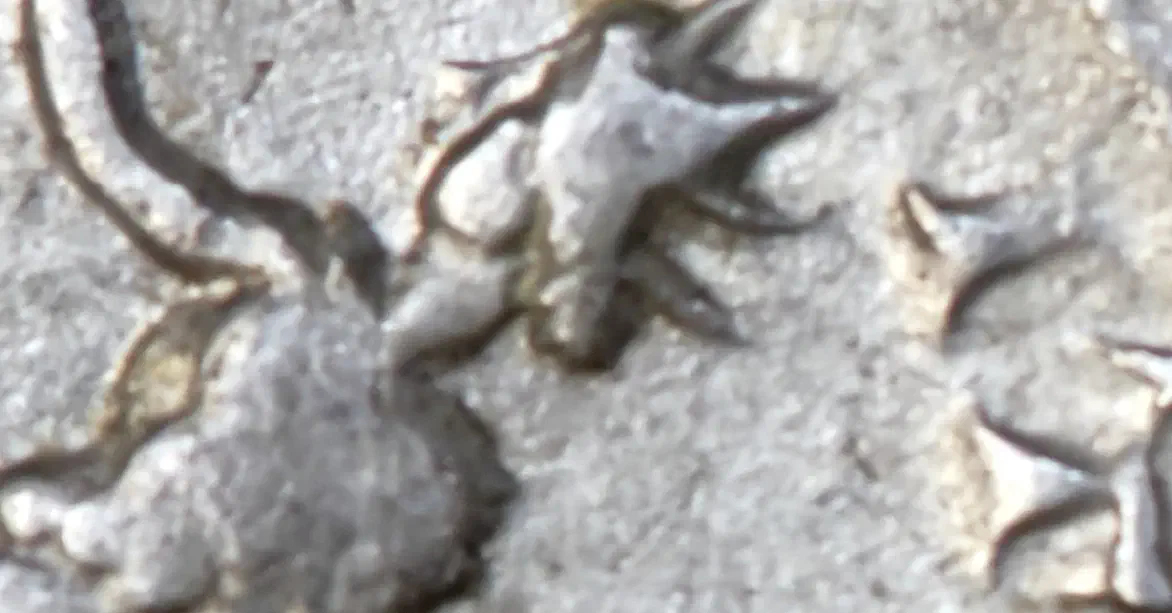
The coin they handed Jesus called Caesar the son of a god
The coin in the tribute question was a silver denarius of Tiberius. Its obverse reads TI CAESAR DIVI AVG F AVGVSTVS: Tiberius Caesar Augustus, son of the divine Augustus. Its reverse reads PONTIF MAXIM: high priest. Son of a god and high priest, stamped on one coin. Jesus asks his questioners to produce it, and they do, in the temple courts, the week he overturned the tables of the men whose job was to keep coins like this one out.

The trap
Matthew 22:15-16 : “Then went the Pharisees, and took counsel how they might entangle him in his talk. And they sent out unto him their disciples with the Herodians.”
The alliance is the first signal. The Herodians backed Rome’s client dynasty. The Pharisees opposed everything the Herodian house stood for. Mark 3:6 records the only agenda these two groups ever shared: “the Pharisees went forth, and straightway took counsel with the Herodians against him, how they might destroy him.” Luke states the goal of this specific question: “that they might take hold of his words, that so they might deliver him unto the power and authority of the governor” (Luke 20:20 ).
The question: “Is it lawful to give tribute unto Caesar, or not?” (Matthew 22:17 ). The word for tribute in Matthew and Mark is kensos (κῆνσος ), a loanword from the Latin census: the Roman poll tax assessed by registration. Luke uses the ordinary Greek word phoros (φόρος , “tribute”).
When Rome imposed the census under Quirinius, Judas of Galilee raised a revolt on the ground that paying the tax acknowledged Caesar as master in God’s land. Acts 5:37 records the outcome: “he also perished; and all, even as many as obeyed him, were dispersed.” Josephus documents the movement and its aftermath. That is the trap’s geometry. Answer yes, and the crowd that hailed him as Messiah days earlier hears him side with Rome against the position men had died for. Answer no, and the Herodians have their charge of sedition for the governor.
The coin
Jesus answers the question with a request: “Shew me the tribute money. And they brought unto him a penny” (Matthew 22:19 ).
The KJV “penny” translates denarion (δηνάριον ), the denarius, a silver coin representing a day’s wage for a laborer (Matthew 20:2 ). The denarius circulating in Judea under Tiberius was struck at Lugdunum in Gaul. Numismatics catalogs it as RIC I Tiberius 26/30 and knows it by the name this passage gave it: the tribute penny.
Obverse: the laureate head of Tiberius, circled by the inscription:
TI CAESAR DIVI AVG F AVGVSTVS
Tiberius Caesar Divi Augusti Filius Augustus: “Tiberius Caesar Augustus, son of the divine Augustus.” The Roman senate deified Augustus at his death in 14 AD. From that decree forward, his adopted son Tiberius carried the title divi filius, son of a god.
Reverse: a seated female figure, commonly identified as Livia as Pax, circled by the inscription:
PONTIF MAXIM
Pontifex Maximus: “greatest priest,” the office of high priest of Roman religion, held by the emperor.
The two titles of the man they are questioning, minted onto the coin they are about to hand him.
They produce it in the temple
The confrontation takes place in the temple courts. Matthew 21:23 sets the scene (“when he was come into the temple”) and the sequence of challenges runs there through chapter 23.
The men who came to test his fidelity to the Law of Moses are carrying, inside the temple, a graven image of a man whose inscription declares him the son of a god. The second commandment: “Thou shalt not make unto thee any graven image” (Exodus 20:4 ). They answered his question by reaching into their own pockets, in that place.
The tables he had just overturned
Earlier that week, in the same courts: “Jesus went into the temple of God, and cast out all them that sold and bought in the temple, and overthrew the tables of the moneychangers” (Matthew 21:12 ).
The money changers existed because of coins like the tribute penny. The half-shekel temple tax (Exodus 30:13 ) could not be paid in Roman denarii bearing the image of a deified emperor. The Mishnah (Bekhorot 8:7) reckons the biblical shekel payments in Tyrian coinage, whose silver content far exceeded the provincial issues. Pilgrims exchanged their Roman money at the changers’ tables and paid the temple in Tyrian shekels.
The Tyrian shekel bears the head of Melqart, the Baal of Tyre, on its obverse, and an eagle on its reverse. The temple authorities accepted it because its silver was consistently pure. The system built to keep Caesar’s image out of the treasury took in the image of Baal instead. This is the same mechanism as the takanot: a human ruling that manages the letter while the substance walks past it. Jesus overturned those tables at the start of the week. The tribute question comes later that week, from men carrying the very coin the tables existed to filter out.
Whose image
“And he saith unto them, Whose is this image and superscription?” (Matthew 22:20 )
Two words carry the answer. Eikon (εἰκών , “image, likeness”) and epigraphe (ἐπιγραφή , “inscription”). They answer: Caesar’s.
“Render therefore unto Caesar the things which are Caesar’s; and unto God the things that are God’s” (Matthew 22:21 ).
The verb is apodidomi (ἀποδίδωμι , “to give back, to return”), not the plain didomi (δίδωμι , “to give”) the questioners used. They asked whether it is lawful to give. He answers about giving back. Ownership is settled by image: the coin bears Caesar’s eikon, so it is Caesar’s, and returning it costs nothing that was ever yours.
The second half of the sentence uses the same logic, and the questioners knew the verse it rests on. Genesis 1:27 in the Septuagint: God made man kat’ eikona theou (κατ' εἰκόνα θεοῦ ), “according to the image of God.” The coin carries Caesar’s image and goes back to Caesar. Man carries God’s image and goes back to God. The men holding the denarius are themselves the coin in the second half of the answer.
“When they had heard these words, they marvelled, and left him, and went their way” (Matthew 22:22 ). Luke adds: “they could not take hold of his words before the people” (Luke 20:26 ).
References
- Roman Imperial Coinage I (2nd ed.), Tiberius 26/30: the “tribute penny” denarius, Lugdunum mint; obverse TI CAESAR DIVI AVG F AVGVSTVS, reverse PONTIF MAXIM.
- Suetonius, Divus Augustus 100: senate decree of divine honors for Augustus at his death (14 AD), the basis of Tiberius’s divi filius title.
- Mishnah, Bekhorot 8:7: biblical shekel payments reckoned in Tyrian coinage for its silver content.
- Josephus, Antiquities 18.1.1: the census under Quirinius and the revolt of Judas the Galilean against the tax.