

The Angel of the LORD speaks as God and the text never corrects him
The Hebrew Bible contains a figure called malakh YHWH (מַלְאַךְ יְהוָה , “the Angel of the LORD”) who speaks as God in the first person, forgives sin, carries the Name, receives worship and sacrifice, and is called God to his face by the people who meet him. The text never corrects them. Second Temple Judaism knew this figure and debated him; rabbinic Judaism later condemned the conclusion as the heresy of “two powers in heaven”, after Christians named the second power.

The word and the figure
Malakh (מַלְאָךְ ) means messenger. The word itself proves nothing: it is used of human couriers (Genesis 32:3 ), of prophets (Haggai 1:13 , “the LORD’s messenger”), of priests (Malachi 2:7 ), and of the coming forerunner (Malachi 3:1 ). The Greek ἄγγελος (angelos) has the same range.
The question is a specific, recurring figure with the definite article, the Angel of the LORD, who does and says what no messenger does.
The pattern across the appearances
| Passage | Scene | What identifies him as God |
|---|---|---|
| Genesis 16:7-13 | Hagar in the wilderness | “I will multiply thy seed”; Hagar names him “Thou God seest me” |
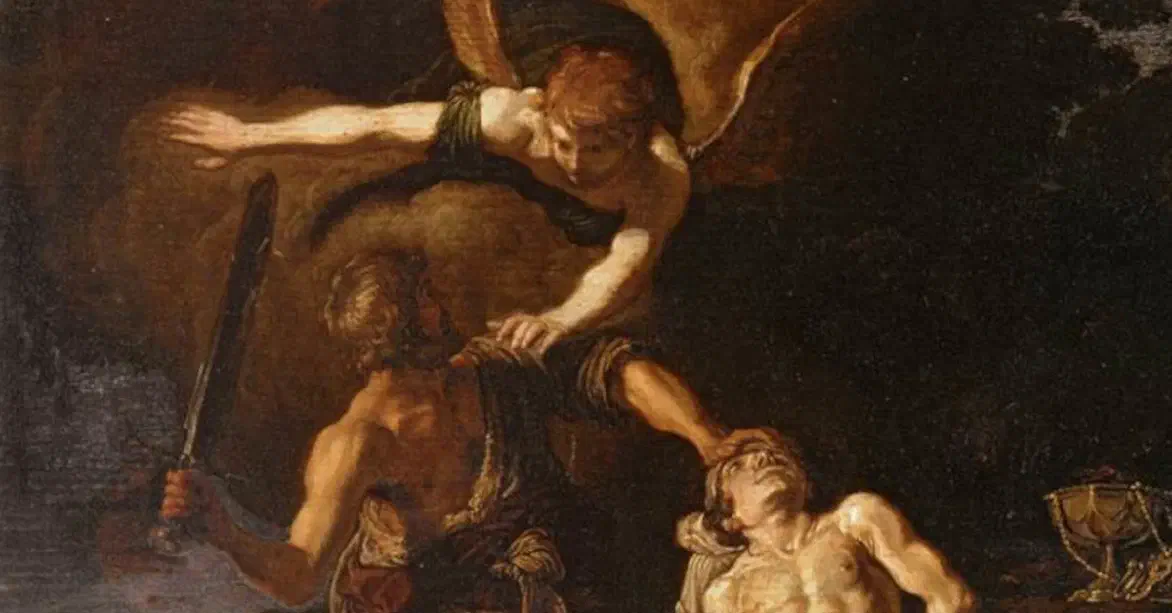
| Genesis 22:11-12 | The binding of Isaac | “thou hast not withheld thy son, thine only son from me” |
| Genesis 31:11-13 | Jacob’s dream | “I am the God of Beth-el” |
| Genesis 32:24-30 | Peniel | Jacob: “I have seen God face to face”; Hosea 12:3-4 calls him both “the angel” and “God” |
| Genesis 48:15-16 | Jacob’s blessing | “God… the Angel which redeemed me” in poetic parallel |
| Exodus 3:2-6 | The burning bush | The angel appears (v2), God speaks from the bush (v4): “I am the God of thy father” |
| Exodus 23:20-21 | The guide to Canaan | “he will not pardon your transgressions: for my name is in him” |
| Joshua 5:13-15 | Captain of the LORD’s host | Accepts worship; “put off thy shoe,” the command of the bush |
| Judges 2:1-4 | Bochim | “I made you to go up out of Egypt… I will never break my covenant” |
| Judges 6:11-24 | Gideon | Alternates with “the LORD” in the narration; Gideon fears death for having seen him |
| Judges 13:3-22 | Manoah and his wife | “We shall surely die, because we have seen God”; accepts the offering |
| Zechariah 3:1-4 | Joshua the high priest | Removes iniquity, the prerogative of God alone |
Two of these are covered from other angles elsewhere on this site: Jacob’s night at Peniel in the initial answer is no, the bush and the Name in the ego eimi count.
Hagar (Genesis 16). The first mention, and the law of first mention sets the definition. The Angel finds a runaway Egyptian slave and promises: “I will multiply thy seed exceedingly, that it shall not be numbered for multitude” (16:10). The first person is the covenant-maker’s own voice. Hagar’s response is the text’s own verdict: “she called the name of the LORD that spake unto her, Thou God seest me” (אֵל רֳאִי , El Roi).
The Name-bearer (Exodus 23:20-21). “Behold, I send an Angel before thee… Beware of him, and obey his voice, provoke him not; for he will not pardon your transgressions: for my name is in him.” Two divine prerogatives in one verse: the authority to pardon or withhold pardon, and the Name itself dwelling in him. In Hebrew thought the Name is the presence itself (שֵׁם , shem; Deuteronomy 12:11 , the place where God sets his Name). A creature cannot contain the Name.
Manoah (Judges 13). Asked his name, the Angel answers: “Why askest thou thus after my name, seeing it is secret?” The Hebrew is peli (פֶּלִאי , “wonderful, incomprehensible”), the same root as the child’s name in Isaiah 9:6 : “his name shall be called Wonderful (פֶּלֶא , pele), Counsellor, The mighty God.” Manoah’s conclusion when the Angel ascends in the flame of the altar: “We shall surely die, because we have seen God” (Judges 13:22).
Two YHWHs in one verse
Genesis 19:24, at the destruction of Sodom:
Then the LORD rained upon Sodom and upon Gomorrah brimstone and fire from the LORD out of heaven. Genesis 19:24 KJV
YHWH on the earth (the one who ate with Abraham and negotiated the count of the righteous in chapter 18) rains fire from YHWH in heaven. Zechariah 3:2 has the same structure: “the LORD said unto Satan, The LORD rebuke thee.” YHWH invokes YHWH. Grammatically these are two subjects with one Name.
Daniel 7:9 puts thrones, plural, in the heavenly courtroom, seats the Ancient of days on one, and then “one like the Son of man came with the clouds of heaven” to receive everlasting dominion (7:13-14 ). Riding the clouds is, everywhere else in the Old Testament, exclusively what YHWH does (Deuteronomy 33:26 , Psalm 104:3 , Isaiah 19:1 ).
Worship accepted, worship refused
The captain of the LORD’s host in Joshua 5:14-15 receives Joshua’s worship and commands: “Loose thy shoe from off thy foot; for the place whereon thou standest is holy”, the sentence spoken from the bush.
The control case is in Revelation. John twice falls to worship an angel, and twice is stopped immediately: “See thou do it not: I am thy fellowservant… worship God” (Revelation 19:10 , 22:9 ). Ordinary messengers refuse worship on reflex. The Angel of the LORD accepts it.
Two powers in heaven
Second Temple Judaism saw all of this. The debate it produced is documented from inside rabbinic literature. The Talmud records Elisha ben Abuyah seeing the exalted Metatron seated in heaven and concluding, “perhaps there are two powers” (Hagigah 15a), for which he is remembered as Acher, “the other one,” the arch-heretic. Sanhedrin 38b has a min (heretic) arguing for the second power from the very verses above, and records the tradition that Metatron’s “name is like his master’s” (an appeal to Exodus 23:21). Rabbi Akiva’s suggestion that the second throne of Daniel 7 is for David’s messiah earns a rebuke: “Akiva, how long will you profane the Shekhinah?” (Hagigah 14a).
Alan Segal’s study of the evidence concluded that the two-powers idea circulated within Judaism before Christianity, built on exactly these texts, and was formally condemned as heresy in the second century, after the followers of Jesus had identified the second power by name.
The New Testament identification
John states the problem the Old Testament creates: “No man hath seen God at any time” (John 1:18 ). Yet Jacob saw God face to face, and the elders of Israel “saw the God of Israel” and ate and drank (Exodus 24:10-11 ). John’s resolution is in the same verse: “the only begotten Son, which is in the bosom of the Father, he hath declared him.” The visible YHWH, the Word who “was God” and “was made flesh” (John 1:1 , 1:14 ), is the one they saw.
Paul makes the identification casually, as settled knowledge: the rock that followed Israel in the wilderness, “that Rock was Christ” (1 Corinthians 10:4 ). Jacob’s blessing had already fused the titles: “God, before whom my fathers Abraham and Isaac did walk… the Angel which redeemed me from all evil, bless the lads” (Genesis 48:15-16). The verb is ga’al (גָּאַל ), the kinsman redeemer.
This figure is the reason “before Abraham was, I am” (John 8:58 ) was heard as a claim.
References
- Alan F. Segal, Two Powers in Heaven: Early Rabbinic Reports about Christianity and Gnosticism (Brill, 1977): the two-powers doctrine as an inner-Jewish development condemned in the second century.
- Babylonian Talmud, Hagigah 15a: Elisha ben Abuyah, Metatron, and “two powers”; Hagigah 14a: Akiva and the thrones of Daniel 7; Sanhedrin 38b: the min’s argument and “his name is like his master’s.”