

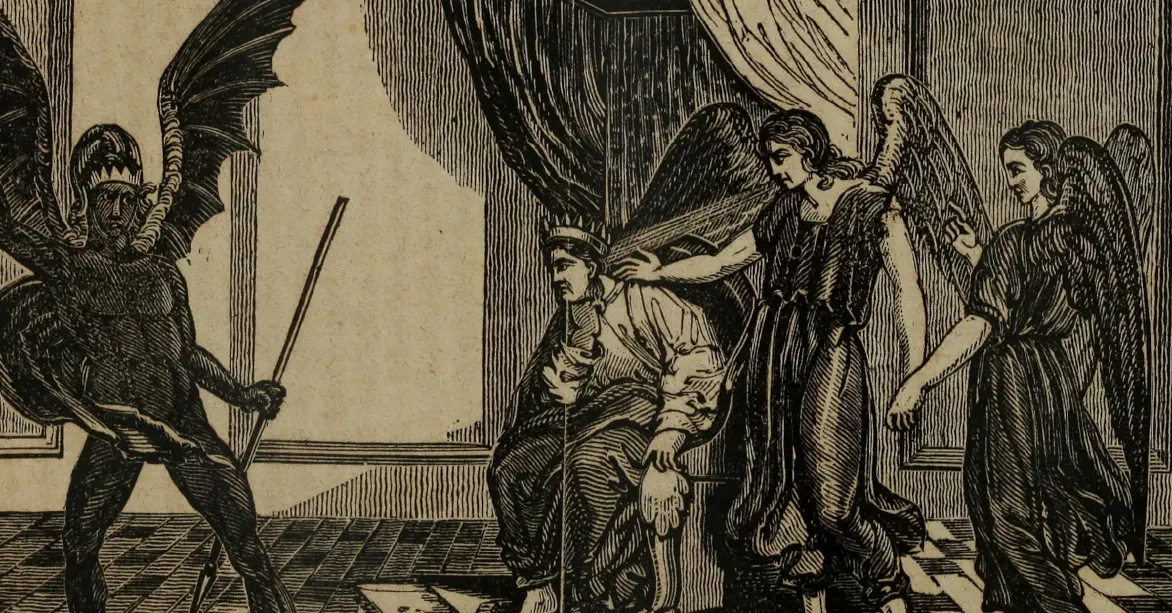
Psalm 82 and the divine council that governs the nations
Psalm 82 opens with God (אֱלֹהִים ) standing in the divine assembly and pronouncing judgment on the gods (אֱלֹהִים ). The same Hebrew word is used for both. The beings judged are spiritual entities with real authority over nations, and they have ruled unjustly. The psalm ends with God rising to judge all the earth, reclaiming the nations that Deuteronomy 32:8-9 describes him allotting to these beings in the first place.

The Hebrew text of Psalm 82:1
אֱלֹהִים נִצָּב בַּעֲדַת אֵל בְּקֶרֶב אֱלֹהִים יִשְׁפֹּט“God standeth in the congregation of the mighty; he judgeth among the gods.” (Psalm 82:1 , KJV)
Three key terms establish the scene:
Elohim (אֱלֹהִים , “gods, divine beings”) appears twice. The first occurrence is the subject, the God of Israel. The second is the object, the council members being judged. The word is grammatically plural and contextually flexible. It refers to the God of Israel, to other divine beings, to the spirit of Samuel in 1 Samuel 28:13 , and to angels in Psalm 8:5 (confirmed by Hebrews 2:7 , which translates it as ἀγγέλους ).
Adat-El (עֲדַת אֵל , “congregation of God”) designates the assembly. The noun edah (עֵדָה , “assembly, congregation”) is the same word used for the congregation of Israel. Here it applies to a heavenly gathering presided over by El.
Yishpot (יִשְׁפֹּט , “he judges”) is an imperfect verb indicating ongoing or imminent action. The judgment is being pronounced.
The charge against the council
Psalm 82:2-4 specifies the indictment:
“How long will ye judge unjustly, and accept the persons of the wicked? Defend the poor and fatherless: do justice to the afflicted and needy. Deliver the poor and needy: rid them out of the hand of the wicked.” (KJV)
The accused are judicial figures with real authority to judge. The charge is dereliction: they have favored the wicked and neglected the vulnerable.
The sentence
“I have said, Ye are gods; and all of you are children of the most High. But ye shall die like men, and fall like one of the princes.” (KJV)
The sentence has three elements:
Acknowledgment of status. “Ye are elohim” confirms their identity as divine beings. “Children of the most High” (בְנֵי עֶלְיוֹן , bene Elyon) places them in the same category as the bene elohim of Job 1:6 and Genesis 6:2.
Mortality imposed. “Ye shall die like men” (כְּאָדָם תְּמוּתוּן ) is the punishment. Mortality is imposed as a judicial consequence, a demotion for beings of the divine class.
Fall like princes. The Hebrew sarim (שָׂרִים , “princes, rulers”) connects to Daniel 10:13 , where the prince of Persia is a spiritual being opposing the angel sent to Daniel. The council members in Psalm 82 and the territorial princes in Daniel are the same class of entity.
The Deuteronomy 32 background
Deuteronomy 32:8-9 records the event behind the Psalm. When God divided the nations, he assigned each to a member of his divine council (the Dead Sea Scrolls preserve bene elohim where the Masoretic Text reads “sons of Israel”). Israel he kept as his own direct portion. The beings assigned in Deuteronomy 32 are the same council members Psalm 82 charges and sentences.
The final verse
“Arise, O God, judge the earth: for thou shalt inherit all nations.” (KJV)
The verb nachal (נָחַל , “to inherit, take possession”) is the same root used in Deuteronomy 32:9 for God’s inheritance of Israel. What was limited to one nation in Deuteronomy 32 expands to all nations in Psalm 82. The council has failed. God takes back the entire earth.
The divine council elsewhere in the Psalms
Psalm 82 is the most explicit council text, but the concept appears throughout the Psalter:
Psalm 89:6-7 : “For who in the heaven can be compared unto the LORD? who among the sons of the mighty (בְּנֵי אֵלִים ) can be likened unto the LORD? God is greatly to be feared in the assembly of the saints (סוֹד קְדֹשִׁים ), and to be had in reverence of all them that are about him.”
The phrase bene elim (בְּנֵי אֵלִים , “sons of the mighty ones”) is a variant of bene elohim. The sod qedoshim (סוֹד קְדֹשִׁים , “council of the holy ones”) names the assembly explicitly.
Psalm 29:1 : “Give unto the LORD, O ye mighty (בְּנֵי אֵלִים ), give unto the LORD glory and strength.”
The KJV translates bene elim as “ye mighty.” The Hebrew addresses the sons of the divine beings directly, commanding them to worship YHWH. The psalm presupposes their existence and their subordination.
Jesus and Psalm 82
John 10:34-36 : “Jesus answered them, Is it not written in your law, I said, Ye are gods? If he called them gods, unto whom the word of God came, and the scripture cannot be broken; Say ye of him, whom the Father hath sanctified, and sent into the world, Thou blasphemest; because I said, I am the Son of God?”
Jesus quotes Psalm 82:6 . His argument assumes the elohim in Psalm 82 are real beings with real status. If the text calls them elohim and that designation stands (“the scripture cannot be broken”), then the title applies with greater force to the one sanctified and sent by the Father.
References
- Dead Sea Scrolls, 4QDeut (Deuteronomy 32:8 ): preserves “sons of God” (bene elohim) where the Masoretic Text reads “sons of Israel.”