

Three days and three nights is a Hebrew idiom and the Bible uses it that way
Matthew 12:40 gives the sign of Jonah: “so shall the Son of man be three days and three nights in the heart of the earth.” Friday evening to Sunday morning contains one full day and two nights, and the objection writes itself. The answer is in the Bible’s own counting. Hebrew reckons any part of a day as a day, the Old Testament uses “three days and three nights” for spans that end on the third day, and the gospel writers switch freely between “after three days” and “on the third day” for the same event.

The idiom inside the Old Testament
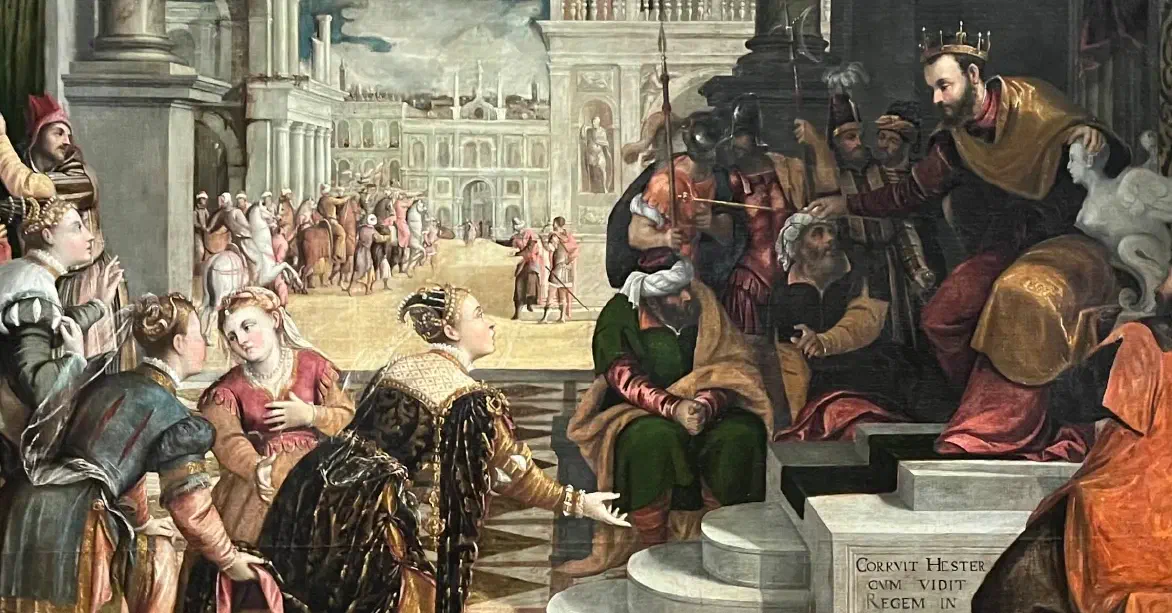
Esther. Esther 4:16 : “fast ye for me, and neither eat nor drink three days, night or day: I also and my maidens will fast likewise; and so will I go in unto the king.” Esther 5:1 : “Now it came to pass on the third day, that Esther put on her royal apparel” and went in. The three-days-and-nights fast ends on the third day. The book states both within three verses.
The Egyptian slave. 1 Samuel 30:12-13 : he “had eaten no bread, nor drunk any water, three days and three nights,” and in the next verse dates his abandonment: “three days agone I fell sick.” The same span, both formulas.
Joseph’s brothers. Genesis 42:17-18 : Joseph puts them “into ward three days. And Joseph said unto them the third day, This do, and live.” Confined three days; released on the third.
Rehoboam. 2 Chronicles 10:5 , 10:12 : “Come again unto me after three days… So Jeroboam and all the people came to Rehoboam on the third day, as the king bade.” The text itself equates “after three days” with “on the third day.”
The rabbinic principle formalizes what these texts practice: miktsat hayom kekulo (מקצת היום ככולו ), “part of the day is as the whole of it.” A dying man’s partial day counts as a day of mourning; a partial day of a king’s reign counts as a year of it. Onah counting (a day-or-night unit, any part standing for the whole) is the ordinary machinery of Hebrew timekeeping.
The gospels use both formulas for one event
| Passage | Formula |
|---|---|
| Mark 8:31 | “after three days rise again” |
| Matthew 16:21 (parallel of Mark 8:31) | “be raised again the third day” |
| Luke 9:22 (same saying) | “be raised the third day” |
| Matthew 12:40 | “three days and three nights in the heart of the earth” |
| Matthew 27:63-64 | Pharisees: “After three days I will rise again”; their request: “until the third day” |
| Luke 24:21 | “to day is the third day since these things were done” |
| 1 Corinthians 15:4 | “he rose again the third day according to the scriptures” |
Matthew 27:63-64 is the decisive entry. The Pharisees quote Jesus saying “after three days,” then ask Pilate for a guard “until the third day.” If “after three days” meant 72 full hours, the guard they requested expires a day too early to prevent the fraud they feared. They were native speakers of the idiom.
The Wednesday and Thursday theories, stated fairly
The 72-hour reading builds its case on real details:
- John 19:31 : “that sabbath day was an high day.” The theory reads this as the annual sabbath of Nisan 15 (Leviticus 23:6-7 ) falling midweek, so the week held two sabbaths, and the crucifixion could sit on Wednesday or Thursday with a full three nights before a late-sabbath resurrection.
- Mark 16:1 vs Luke 23:56 : the women buy spices “when the sabbath was past” (Mark) yet prepare spices and then rest the sabbath (Luke). Two sabbaths with a work day between would reconcile the order.
The reading has two problems.
Luke 24:21. On Sunday afternoon the Emmaus disciples say: “to day is the third day since these things were done.” Counted from Wednesday, Sunday is the fifth day since; from Thursday, the fourth. Only a Friday crucifixion makes Sunday the third day, by exactly the inclusive counting the Old Testament uses everywhere else.
The high day fits the weekly sabbath. Nisan 15 was an annual sabbath in whatever year it fell; when it fell on the weekly sabbath, that Saturday was doubly solemn: a weekly sabbath that was also the feast sabbath is precisely “an high day.”
Matthew 28:1 ’s plural (ὀψὲ δὲ σαββάτων , “in the end of the sabbaths”) is sometimes added as evidence of two sabbaths, but Greek regularly uses the plural of this word for a single sabbath (Matthew 12:1 , Luke 4:16 ); it carries no weight either way.
Firstfruits
Leviticus 23:10-11 fixes a feast inside Passover week: the first sheaf of the harvest, waved “on the morrow after the sabbath.” The morrow after the sabbath is the first day of the week.
The resurrection falls on that feast. Paul writes it as a title: “now is Christ risen from the dead, and become the firstfruits of them that slept” (1 Corinthians 15:20 ). Mary mistakes him for the gardener on the morning the first sheaf is cut; the omer count to Shavuot begins that day and lands on Pentecost. The calendar is doing the arguing: Passover lamb slain at Passover, firstfruits raised at Firstfruits, Spirit poured out at Shavuot. Friday to Sunday is three feast days in a row, each one kept.
References
- Babylonian Talmud, Pesachim 4a: the principle miktsat hayom kekulo, part of the day is as the whole.